
Outpatient Total Knee Replacement

What is Outpatient Total Knee Replacement?
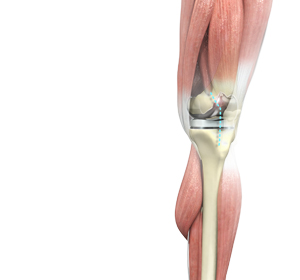
Total knee replacement is the surgical treatment for knee arthritis, where the damaged knee is removed and replaced with an artificial knee implant. Traditionally performed as an inpatient procedure, total knee replacement surgery is now being conducted on an outpatient basis, allowing you to go home on the same day of the surgery.
This is made possible with recent advances such as improved perioperative anesthesia, minimally invasive techniques and initiation of rehabilitation protocols soon after surgery.
When is Outpatient Total Knee Replacement Suggested?
Outpatient total knee replacement is considered when your vital signs are stable, such as heart and respiratory rate, blood pressure, and temperature. Moreover, you need to be able to maintain pain control with oral medication and tolerate a regular diet before being discharged on the same day of surgery.
How is Outpatient Total Knee Replacement Performed?
The outpatient procedure is performed using advancements in anesthetic techniques like a femoral regional block that produces a centralized anesthetic effect and does not require a hospital stay for its effects to wear off, like traditional general anesthesia.
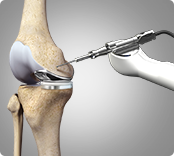
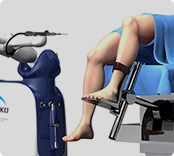
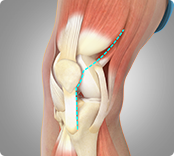
You will be lying on your back on the operating table and a tourniquet is applied to your upper thigh to reduce blood loss. The arthritic knee is approached through small incisions of three-to-four inches (compared to the eight- to twelve-inch-long incision used in the standard open surgical technique), ensuring that the surrounding muscles and tendons are not cut. This facilitates faster recovery. The damaged portions of the femur (thighbone) are trimmed at appropriate angles using specialized jigs and special guides to ensure a perfect fit of the implant. The next step involves the removal of the damaged area of the tibia (shinbone) and the back of the kneecap.
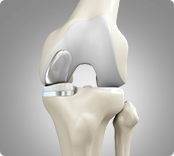
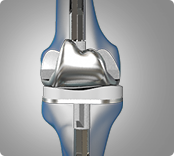
Custom-implants are created using 3-D modeling from a CT scan. This makes sure that the implant fits securely and requires minimal trimming of the surrounding soft tissues. The femoral component is attached to the end of the femur with bone cement. The tibial component is then secured to the end of the bone using bone cement. Your surgeon places a polyethylene liner that acts as an articular surface between the thighbone, shin implants and the back of the kneecap to ensure smooth gliding movement. With all the components in place, the knee joint is examined for range of motion.
All excess cement is removed and the entire joint is cleaned out with a sterile saline solution to prevent infection. Drains are inserted and the incision is closed. A surgical dressing or bandage is placed. The whole process takes just over an hour.
What to Expect after Outpatient Total Knee Replacement?
Several hours after surgery, you will be discharged from the hospital following a thorough examination to make sure you meet the requirements for discharge such as stable vital signs during exercise, ability to eat and take pain medicine by mouth. You generally have a two- to four-week recovery compared to the two-to-three-months needed to recover from traditional knee surgery.
What are the Risks and Complications of Outpatient Total Knee Replacement?
Risks and complications of outpatient total knee replacement include:
- Infection at the surgical site
- Blood clots (deep vein thrombosis or pulmonary embolism)
- Implant loosening or failure
- Nerve or blood vessel injury
- Delayed wound healing
- Persistent pain or stiffness
What are the Advantages of Outpatient Total Knee Replacement?
The advantages of the outpatient procedure include:
- Minimal surgical dissection
- Shorter recovery period
- Shorter hospital stay
- Reduced postoperative pain
- Less blood loss during surgery
- Increased range of motion after surgery
- Less damage to surrounding tissues
Why Choose Dr. Jepson for Outpatient Total Knee Replacement in Colorado Springs, CO?
- Board-certified orthopaedic surgeon: Dr. Jepson is certified by the American Osteopathic Board of Orthopaedic Surgery.
- Fellowship-trained joint replacement specialist: He completed advanced fellowship training in total joint arthroplasty at the Florida Orthopaedic Institute.
- Specialized knee experience: His clinical interests include total joint replacement, complex knee problems, arthritis management and revision surgery.
- Careful outpatient assessment: Dr. Jepson considers overall health, home support, mobility and medical risk factors when determining eligibility for same-day discharge.
- Individualized surgical planning: Treatment is planned according to the patient’s knee damage, anatomy and functional goals.
- Patient education and preparation: Patients receive instructions about medications, mobility, home preparation and warning signs before surgery.
- Coordinated recovery support: CSOG’s joint replacement team helps guide patients through surgery, discharge and postoperative rehabilitation.
Outpatient Total Knee Replacement FAQs
Yes. Both procedures remove damaged knee surfaces and replace them with artificial components. “Outpatient” describes the anticipated length of stay rather than a different type of implant or operation. Surgical techniques may vary according to the patient’s condition and the surgeon’s plan.
Patients generally need stable vital signs, controlled pain and nausea, the ability to eat, drink and urinate, and the ability to walk safely with an assistive device. The surgical team must also determine that the patient has no complications requiring hospital monitoring.
Same-day discharge can be safe for appropriately selected patients when supported by careful screening, modern anesthesia and pain-management protocols, early mobility and a clear recovery plan. Some patients may still need an overnight hospital stay if medical or mobility concerns develop.
A responsible adult should usually remain with the patient during the early recovery period. Help may be needed with meals, medications, transportation and everyday tasks. Patients should prepare a safe walking area and arrange recommended equipment before surgery.
Patients receive instructions explaining which symptoms are expected and when to contact the care team. Increasing pain, excessive swelling, wound drainage, fever, chest pain or shortness of breath should be reported promptly. Chest pain or breathing difficulty may require emergency medical attention.
Schedule an Outpatient Knee Replacement Consultation in Colorado Springs
If advanced knee arthritis is limiting your independence and nonsurgical treatments no longer provide sufficient relief, schedule an evaluation with Dr. Eric K. Jepson at Colorado Springs Orthopaedic Group. He can assess your knee, review your health and home-support needs and determine whether outpatient total knee replacement may be appropriate. Contact CSOG to request an appointment at its North or South Campus for specialized outpatient knee replacement care in Colorado Springs, CO, and surrounding Southern Colorado communities.