
Minimally Invasive Knee Joint Replacement

What is a Minimally Invasive Knee Joint Replacement?
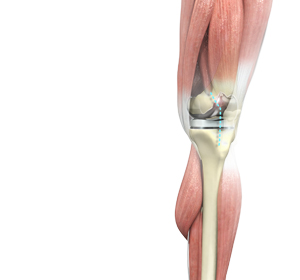
Total knee replacement is a very successful surgical treatment for knee arthritis. Over the years, minimally invasive knee replacement surgical techniques have been developed to lessen tissue trauma and improve patient outcomes. This minimally invasive approach involves much smaller incisions than the usual 10-12 inch incisions used in the traditional knee replacement and spares the quadriceps muscle and tendon, which control bending of the knee, from being cut to access the knee joint.
The smaller incisions with minimally invasive surgery mean fewer tissues are cut resulting in quicker healing and recovery. The potential advantages of minimally invasive joint replacement surgery are:
- Minimal surgical dissection
- Shorter recovery period
- Shorter hospital stay
- Reduced post-operative pain
What is the Procedure for Minimally Invasive Joint Replacement?
Minimally invasive surgery for knee replacement involves the use of smaller incisions which are only 4 to 6 inches in length as compared to the 10-12 inch long incision used in the traditional procedure.
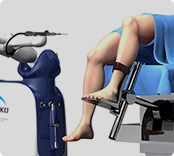
- Surgery is performed under sterile conditions in the operating room under spinal or general anesthesia. You will be lying on your back on the operating table with a tourniquet applied to your upper thigh to reduce blood loss.
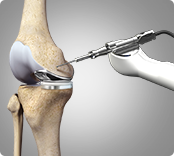
- Your surgeon will then make an incision along the affected knee to expose the knee joint. The surgeon first focuses on the femur (thighbone). The damaged portions of the femur are cut at the appropriate angles using specialized tools.
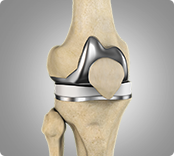
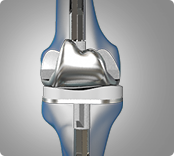
- Then the femoral component is attached to the end of the femur with or without bone cement. The next step involves removal of the damaged area of the tibia (shinbone) and the cartilage. It allows for a smooth surface to which implants can be attached.
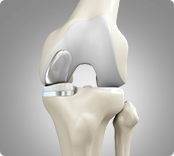
- The tibial component is then secured to the end of the bone using bone cement or screws. Your surgeon will place a plastic piece called an articular surface between these implants to ensure a smooth gliding movement.
- This plastic insert acts in a similar way as the original articular cartilage and helps in supporting your body weight as well as allows the femur bone to move over the tibia. The femur and the tibia bone with their new components are put together to form the new knee joint.
- To ensure that the patella (knee cap) glides smoothly over the new artificial knee, its rear surface is prepared to receive a plastic component. With all its new components in place, the knee joint is examined through its range of motion.
- All excess cement will be removed and the entire joint will be irrigated or cleaned out with a sterile saline solution.
- The incision is then closed and drains are usually inserted. A surgical dressing or bandage is then placed over the incision.
As there is less tissue damage around the knee during the minimally invasive procedure surgery, you can expect a shorter hospital stay, faster recovery and also avoid an unsightly smaller surgical scar.
Why Choose Dr. Jepson for Minimally Invasive Knee Joint Replacement in Colorado Springs, CO?
- Board-certified orthopaedic surgeon: Dr. Jepson is certified by the American Osteopathic Board of Orthopaedic Surgery.
- Fellowship-trained joint replacement specialist: He completed advanced fellowship training in total joint arthroplasty at the Florida Orthopaedic Institute.
- Specialized knee expertise: His clinical interests include total joint replacement, complex knee problems, arthritis management and revision surgery.
- Individualized surgical approach: Dr. Jepson selects the surgical technique according to the patient’s anatomy, joint damage and health rather than incision size alone.
- Focus on tissue preservation: When appropriate, minimally invasive techniques may reduce disruption to the quadriceps muscle and surrounding soft tissues.
- Patient-centered communication: Dr. Jepson explains the available approaches, possible benefits, limitations and risks before surgery.
- Coordinated rehabilitation: CSOG supports patients throughout surgical preparation, treatment and postoperative recovery.
Minimally Invasive Knee Joint Replacement FAQs
Potential candidates include patients with advanced knee arthritis who have not obtained sufficient relief from nonsurgical treatment. Eligibility depends on knee anatomy, the degree of deformity, body composition, previous surgery and overall health. A conventional approach may be safer for some complex conditions.
Possible benefits include a smaller incision, less soft-tissue disruption, reduced early postoperative discomfort and faster initial rehabilitation. These benefits vary among patients and are not guaranteed. Accurate implant positioning and long-term joint function remain more important than incision size.
Many patients begin standing and walking with assistance on the day of surgery or shortly afterward. A physical therapist may recommend a walker or cane and provide exercises to restore strength, flexibility and balance. Progress depends on the procedure and individual recovery.
Patients may gradually return to routine activities over several weeks, while strength, range of motion and endurance can continue improving for several months. Following the rehabilitation plan and attending scheduled follow-up appointments are important parts of recovery.
Potential risks include infection, bleeding, blood clots, stiffness, fracture, nerve or blood vessel injury, implant loosening and persistent pain. Limited surgical exposure may also make the procedure unsuitable for patients with substantial deformity or complex joint damage. The incision may need to be extended if necessary for safe implant placement.
Schedule a Minimally Invasive Knee Replacement Consultation in Colorado Springs
If chronic knee pain and stiffness are limiting your mobility despite nonsurgical treatment, schedule an evaluation with Dr. Eric K. Jepson at Colorado Springs Orthopaedic Group. He can assess your knee, explain the available replacement techniques and determine whether a minimally invasive approach may be appropriate for your condition. Contact CSOG to request an appointment at its North or South Campus for specialized knee replacement care in Colorado Springs, CO, and surrounding Southern Colorado communities.